Convert Excel to Web
Download sample file and create the web report foundation
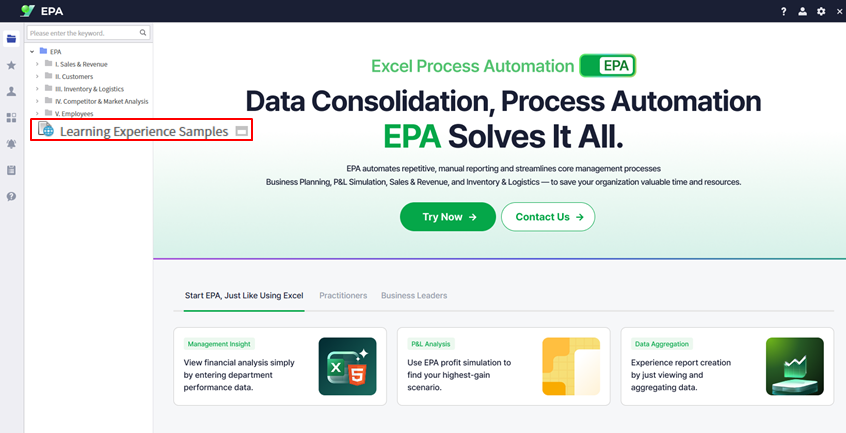
Download the sample Excel file for inventory outbound management from Learning Experience Samples.
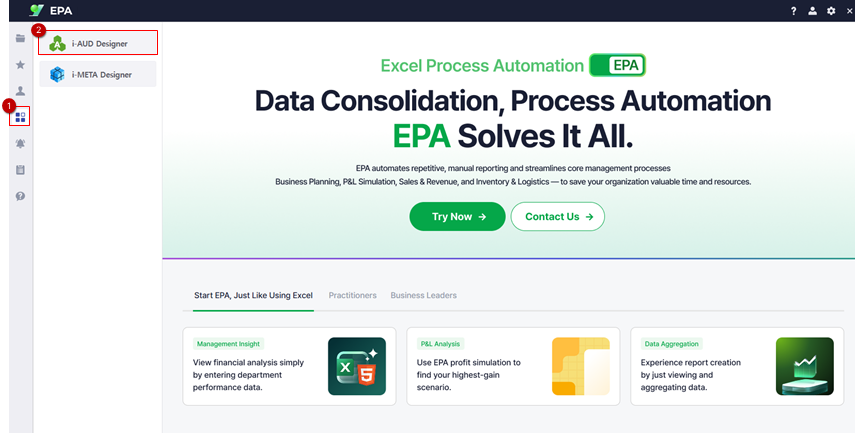
Navigate to [Menu] → [Tool] to launch i-AUD Designer.
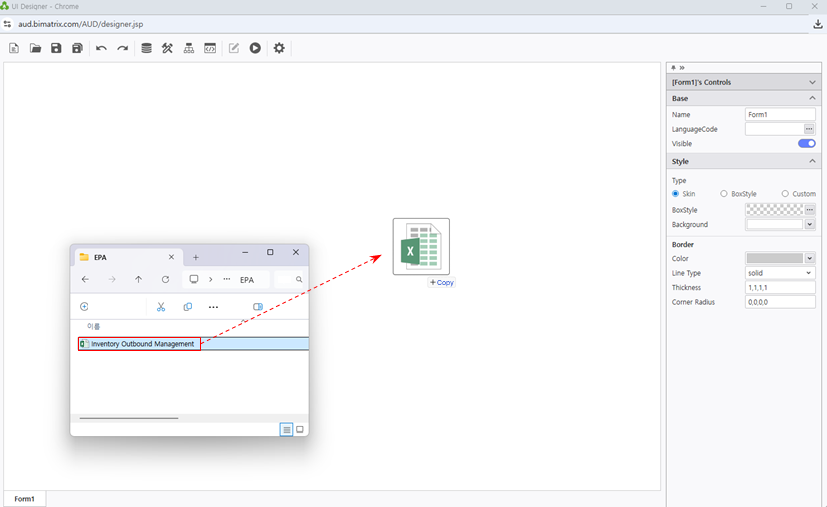
Drag & drop the Excel file into the Designer workspace.
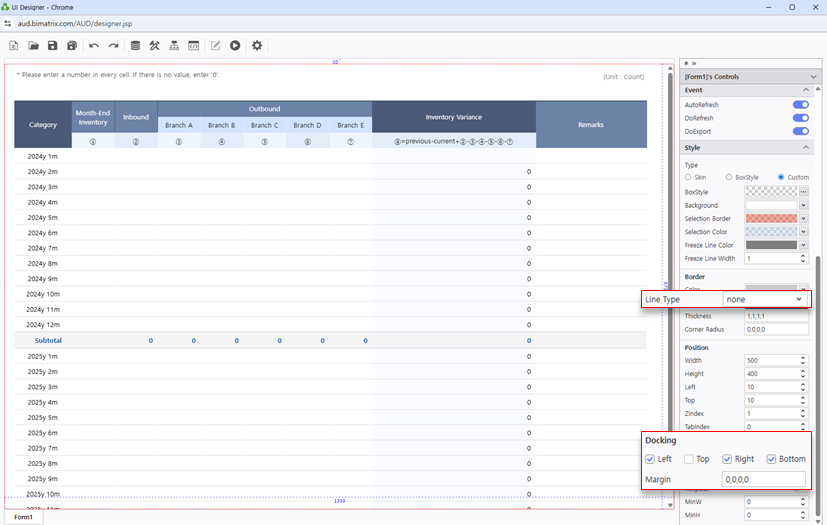
In the Properties pane, set the border Line Type to None for clean presentation.
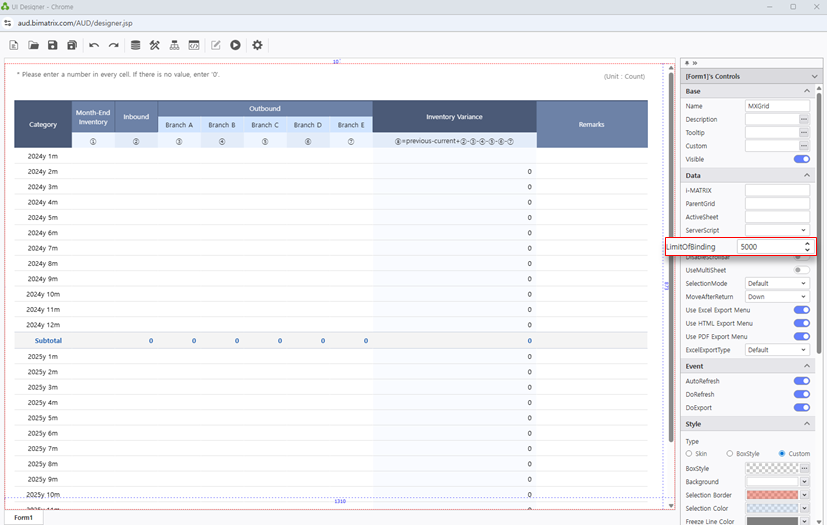
Set Data > LimitofBinding: 5000 to handle large inventory datasets (default is 1,000 records).
Tip: Setting LimitofBinding to 5000 ensures that all inventory records load properly even when dealing with high-volume inbound/outbound data.
Configure Data Input
Define data areas, tables, and launch the UI configuration
Enter the table name in the top-left corner of the table1 area following the naming convention.
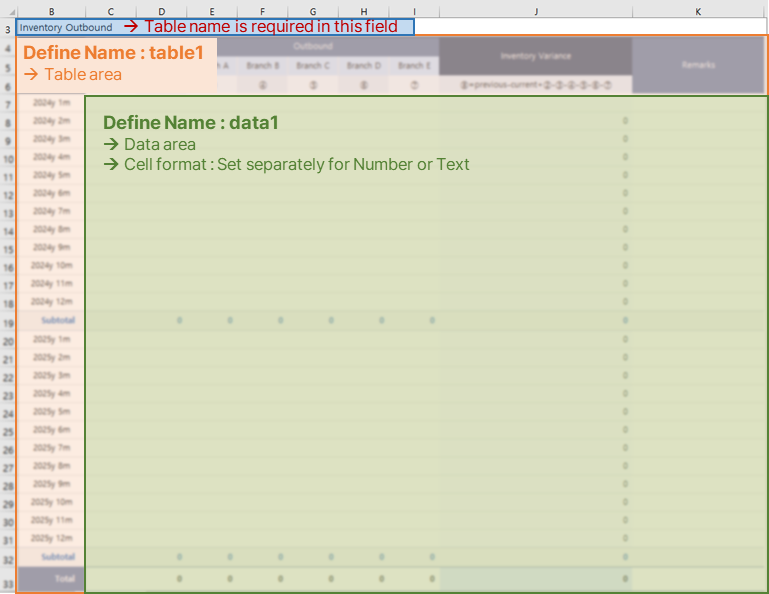
Select the data entry area and name it data1.
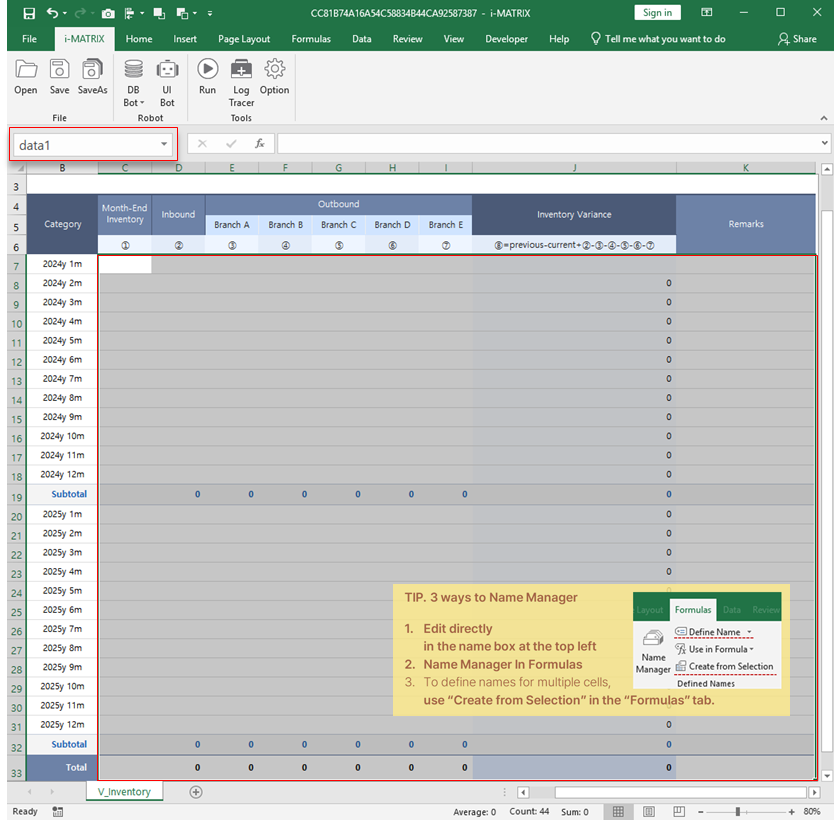
Select the entire table form to be aggregated and name it table1.
Tip: Consistent naming conventions (data1, table1) across reports make it easier to maintain and troubleshoot multiple inventory reports.
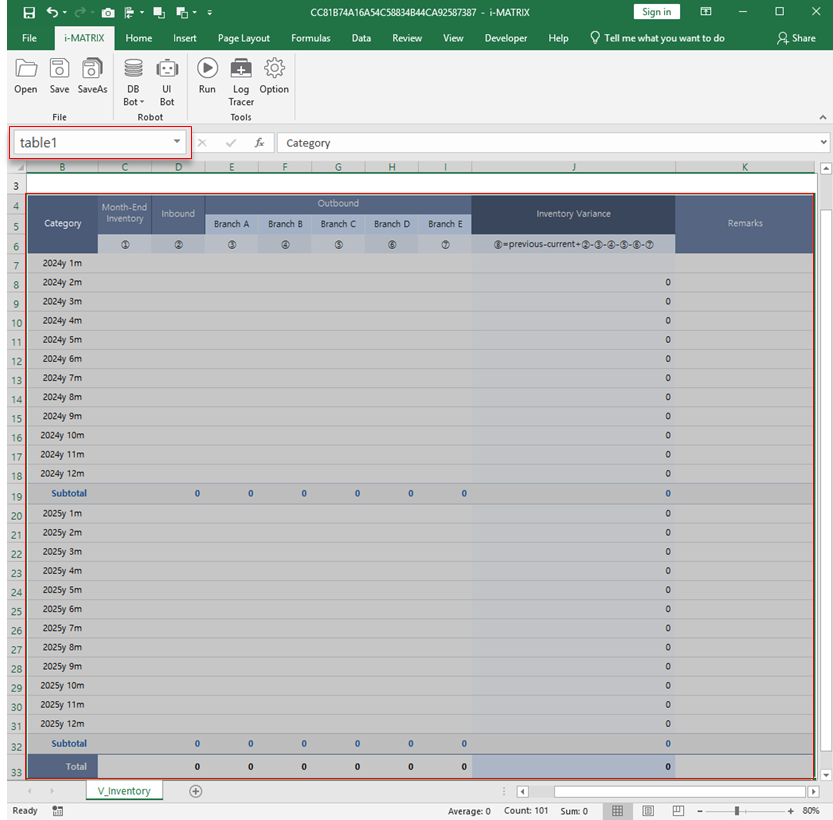
Enter the table name in the designated cell with the row hiding option for a clean display.
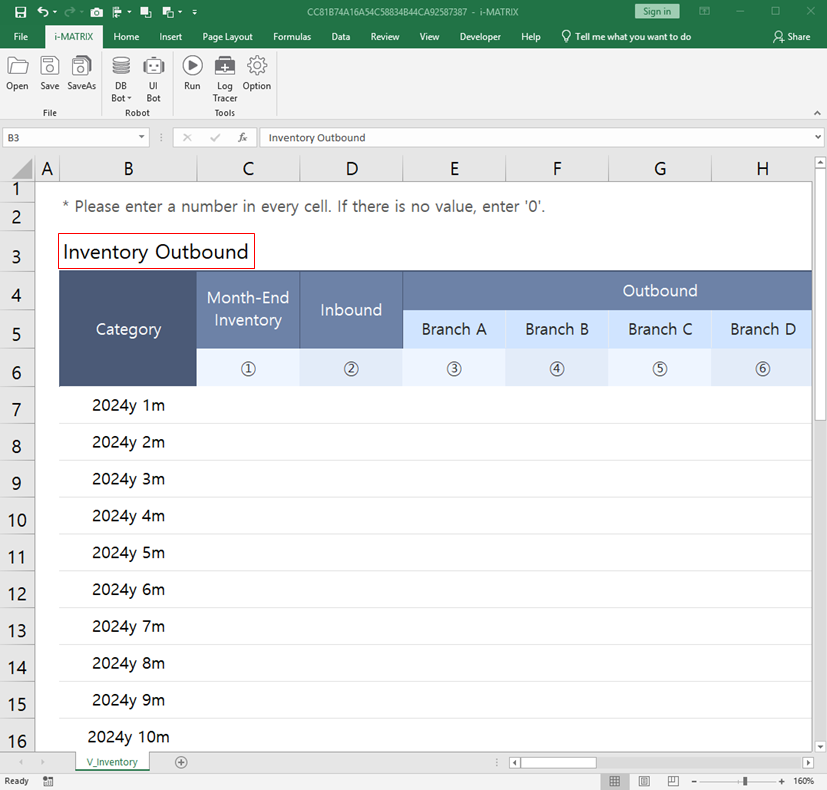
Launch UI Bot to configure the input interface.
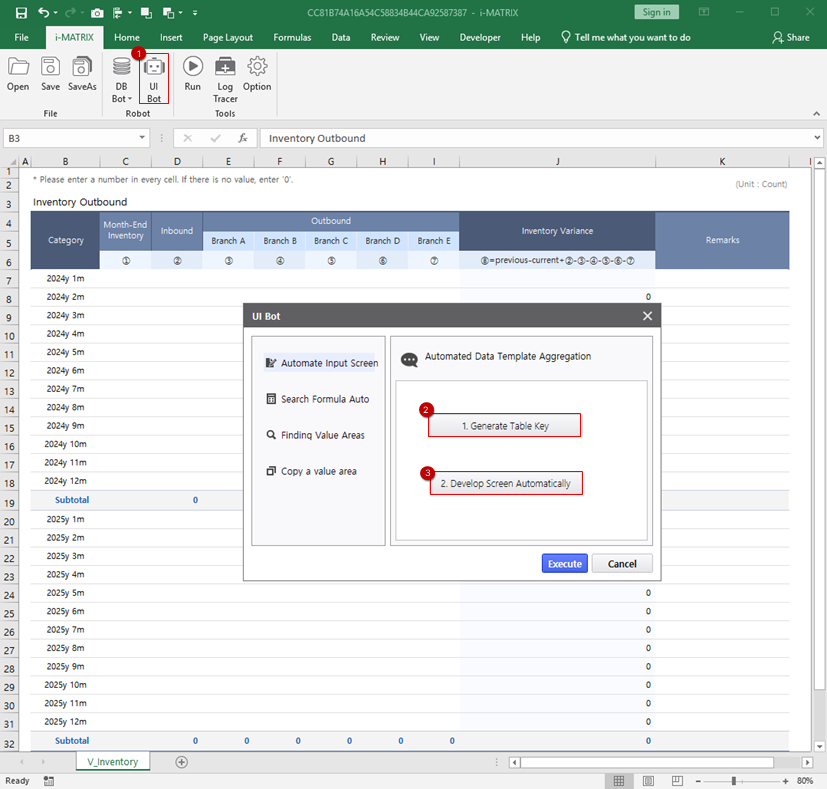
Connect Database & Buttons
Set up database upload, merge execution, and action buttons
Open DB Bot > DB Upload to configure database connectivity.
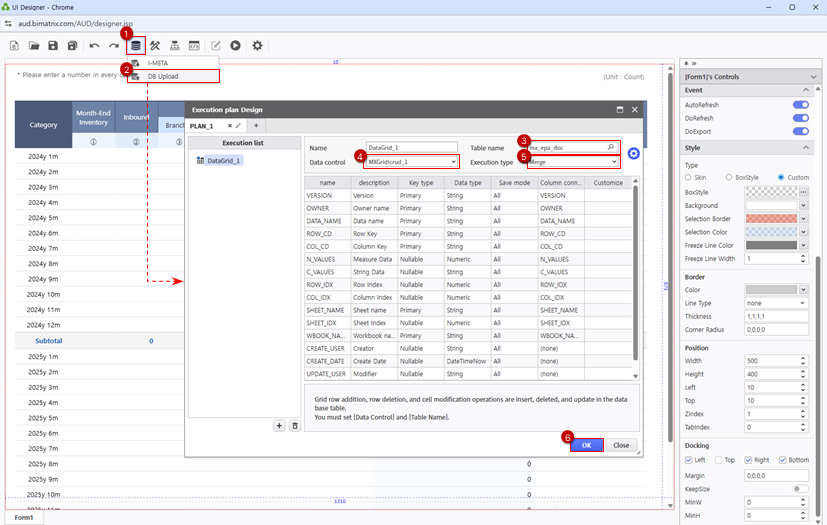
Add two buttons from UI Bot > Button: name them BTN_SAVE and BTN_REFRESH, and place them in the appropriate positions.
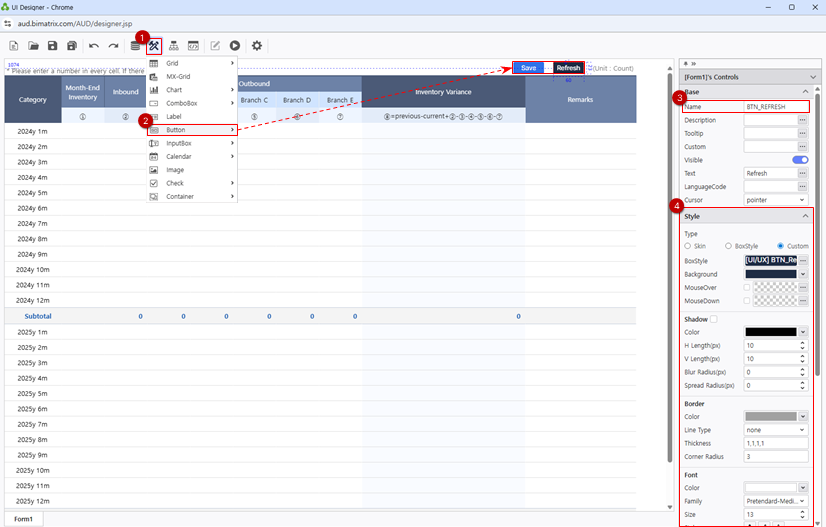
Use Process Bot to assign actions to the buttons (Save and Refresh).
Tip: The Save and Refresh buttons enable real-time collaboration — multiple warehouse staff can update inventory data simultaneously without conflicts.
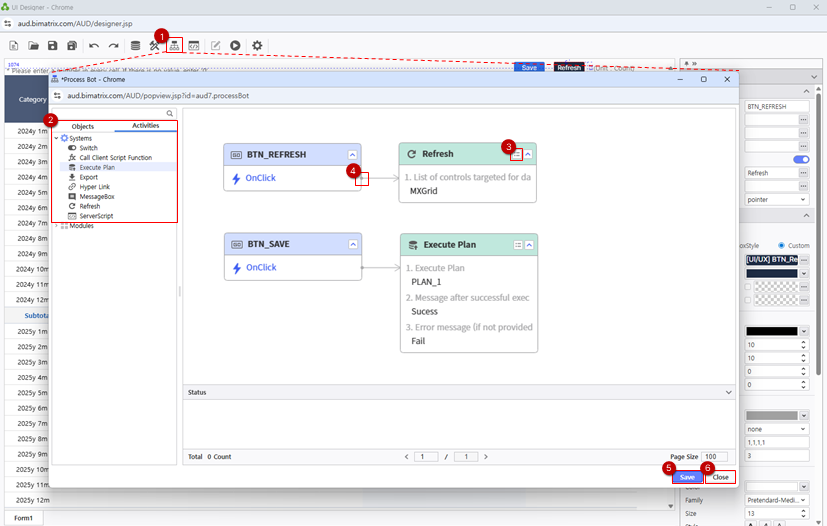
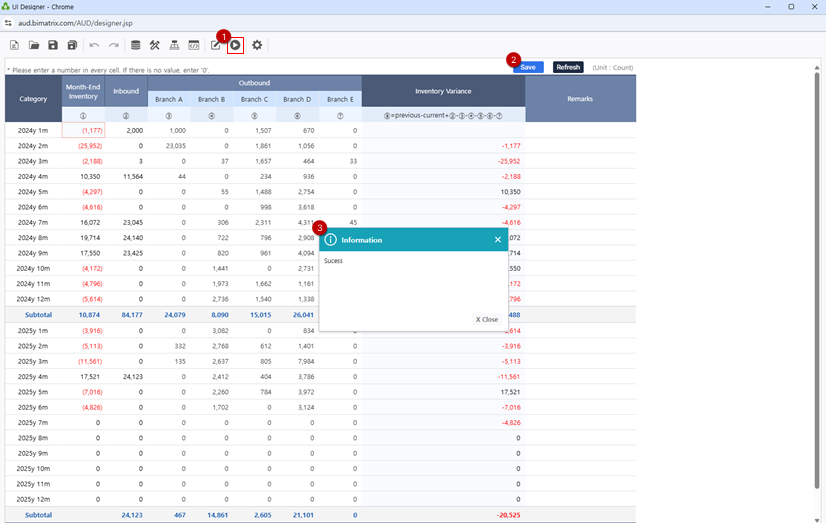
Verify that the Save button stores data in the database and the Refresh button fetches the stored data correctly.
Save Report
Save and verify your completed inventory management report
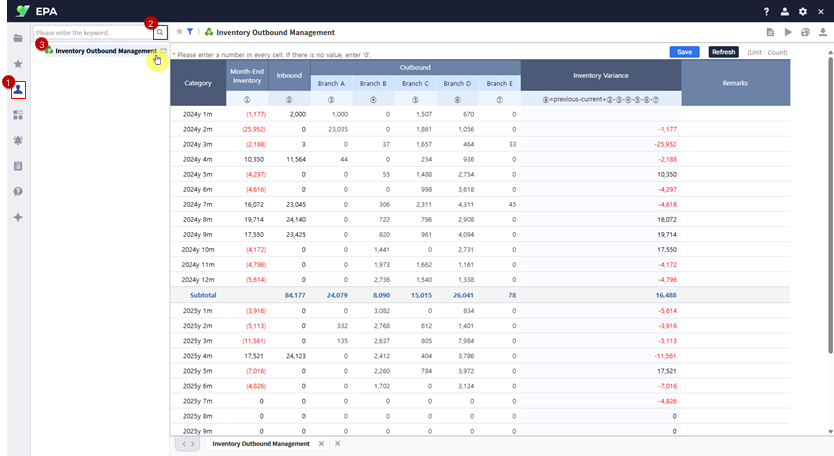
Save your report to My Folder.
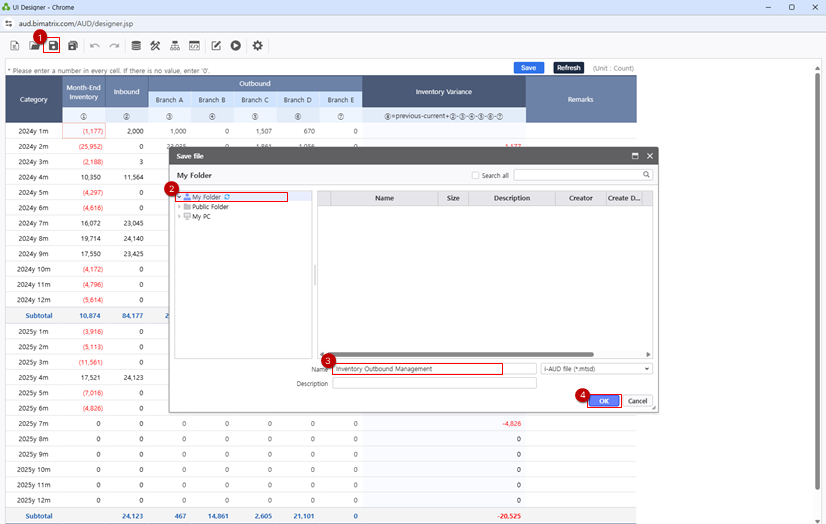
Verify the saved report by navigating to the Individual reports section. Test the Save and Refresh buttons to confirm inventory data operations work correctly.